Test “A constructive drawing of a person’
You will need a small piece of paper and a pen or pencil to do this test.
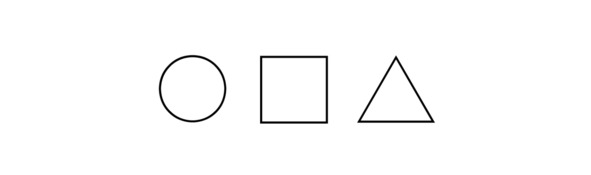
Fig. 4. Geometric figures used in “A constructive drawing of a person.”
“Draw a person made of rectangles, circles, and triangles. The overall number of elements should be 10. Define the age of the person you have drawn.” Shapes can be of any size. Rectangles, ovals, and triangles of prolate forms are also allowed. Within the total number of 10, each figure can be used as often as you choose, and you can also omit using some of the shapes. The only restriction is the overall number and the fact that there should be only one person in the drawing. You need to do this test right now without thinking it over. You will hardly need more than a minute to complete it11.
A brief way to interpret the drawing is the following: it is your self-portrait. Not exact, of course. The drawing you have is a projection of your emotional state, and it reflects how you feel and react to the factors active at the age of the person in the drawing12.
This drawing is a mirror where you can see your emotions, or you can call it ‘a photo of your mind’s energy.”
Sometimes, a person in the drawing can have a head that is too big for the body, and relatively short arms and legs made of triangles: this is a sign that the brain is overheated and hands and feet are cold, and that is a typical symptom pointing to the state of anxiety.

Fig. 5. A big head as a sign of anxiety in the constructive drawing of a person
A circular head and an oval body point to phobia.

Fig. 6. The reflection of fright and fear in the constructive drawing of a person. A round head and an oval body, big eyes, and a navel as a place affected by frightening information; periphery seems to be reduced and drawn with triangles.
A square head and a circular body are signs of conflict involving anger, outrage, or an insult.

Fig. 7. The outline of a protest and anger in a constructive drawing of a person: a square head, an “inflated’ body, energy moved from the arms to the place of the trauma, the legs look like pillars and signify the decision to “stand on one’s ground.”
The age of the person in the drawing sends us to the period when the given symptom appeared. As a rule, this is a period of certain life changes or significant events13.
When working through the neurotic tensions, we will return to this test, but for now, we will just use this information as a certain point for the future work with some references for interpretations.
Now, let’s turn to another specific configuration of the drawing with “a hat on the head.”
Более 800 000 книг и аудиокниг! 📚
Получи 2 месяца Литрес Подписки в подарок и наслаждайся неограниченным чтением
ПОЛУЧИТЬ ПОДАРОКДанный текст является ознакомительным фрагментом.